



The Company is committed to the responsible use of digital technologies, strengthening cybersecurity and data protection to drive its business in a transparent and sustainable manner.
Key Stakeholders Affected

Stakeholder Impact

Business Impact
Performance Against Targets
| Target (2027) |
Target (2025) |
Performance (2027) |
|
|---|---|---|---|
| Revenue growth rate from business innovation1/ | 20% | 10% | 35% |
| Number of efficiency improvement projects | - | 300 Projects | 248 Projects |
| Cost savings from process efficiency improvement projects | - | 111 Million | 148.9 Million |
Management Approach
Amid economic slowdown and shifts in the labor market driven by technological adoption, the Company recognizes the challenges in developing and strengthening collaboration with business partners that have the potential to grow alongside the Company. Accordingly, the Company places emphasis on building strategic partnerships with both existing and new partners that possess innovation capabilities, providing opportunities to propose ideas, technologies, and solutions aligned with the Company’s business direction. These collaborations may be further developed in various forms, such as joint product, service, or business model development. This approach supports the creation of market-responsive innovation while reflecting the Company’s role in promoting an innovation-driven economy and fostering a sustainable business ecosystem.
At the same time, the Company’s digital transformation and innovation management are carried out under a strategic governance framework with clear accountability, driven primarily by business needs. The approach integrates strategic direction setting, process design, and end-to-end implementation, emphasizing data-driven decision-making, cross-functional collaboration, and systematic performance monitoring to ensure that digital initiatives and innovation deliver value, enhance efficiency, and support long-term sustainable growth.
Approach to Setting Direction and Managing the Digital Transformation
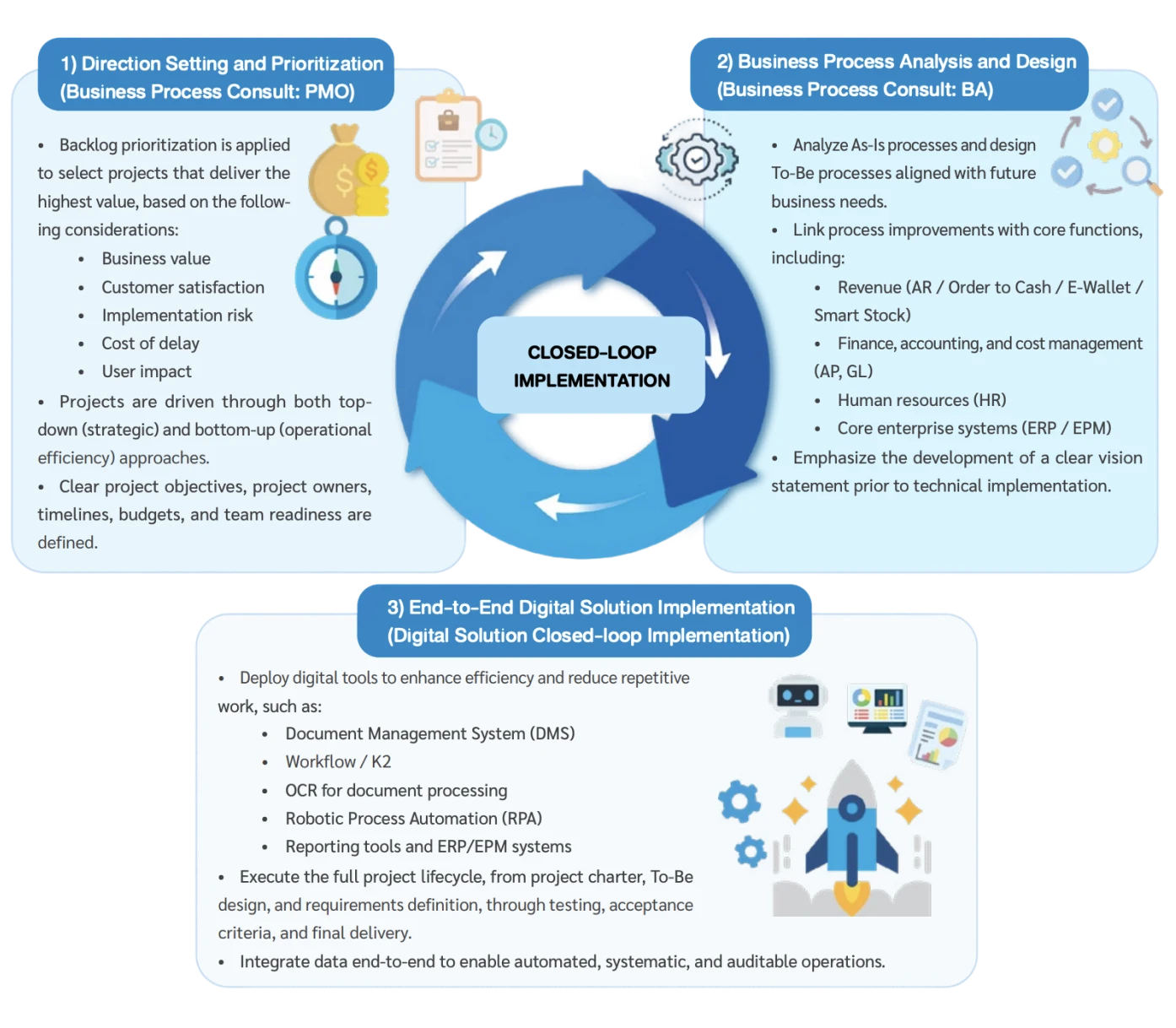
The Company drives its Digital Transformation not merely by adopting technology, but by elevating the organization’s mindset, work processes, and operating model at an enterprise level. This approach aims to enhance efficiency, reduce costs, strengthen transparency, and support long-term sustainable growth. Digital capabilities therefore serve as a key enabler in translating business strategy into tangible, measurable outcomes.
The Company’s digital transformation is implemented in a systematic manner, covering the entire journey from defining business challenges, analyzing and redesigning processes, to the end-to-end deployment of digital solutions through a closed-loop implementation approach. This ensures that the transformation delivers clear, continuous, and sustainable results.
AI Development within the Organization
Artificial Intelligence (AI) has become a critical factor influencing organizational competitiveness in today’s business environment. Organizations must therefore adapt their strategies to leverage AI effectively and sustainably. The Company has established an AI Governance Policy to provide guidance for the proper, secure, and effective use of AI, including the following key areas:
Integration of AI into work processes to enhance efficiency, reduce costs, and support data-driven decision-making. The Company develops and upgrades its information systems to enable the use of AI in data analytics and customer service processes. Workforce development, through the promotion of digital and AI skill training to ensure employees can use technology effectively and securely. The Company provides AI training programs to introduce AI concepts and prepare employees for AI adoption across PTG and its subsidiaries, at all levels, through both onsite and online formats. Governance and risk management, with careful consideration of data security, accuracy, and compliance with applicable laws and regulations, in order to build trust among stakeholders. Continuous review of control measures and policies to ensure alignment with relevant laws, regulations, and best practices.
A systematic approach to AI adoption enables the Company not only to adapt to change, but also to create competitive advantage and achieve sustainable long-term growth.
The Company places strong emphasis on the appropriate development and use of AI by clearly communicating AI policies, guidelines, and roles to employees at all levels. This ensures proper understanding, promotes responsible use, and aligns AI deployment with organizational objectives. And the Company has implemented AI projects to enhance operational efficiency, reduce repetitive workloads, and improve the quality of executive decision-making. The scope and key outcomes of these initiatives are as follows:
Project Scope and Outcomes





Value Delivered to the Organization


Innovation Management
Business Innovation
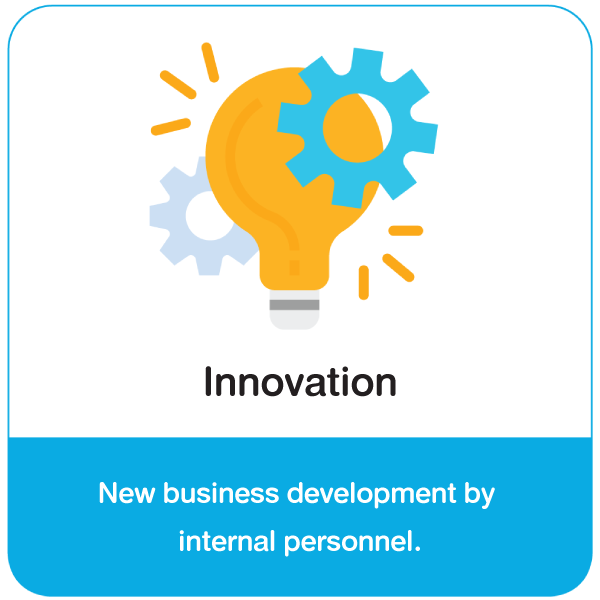
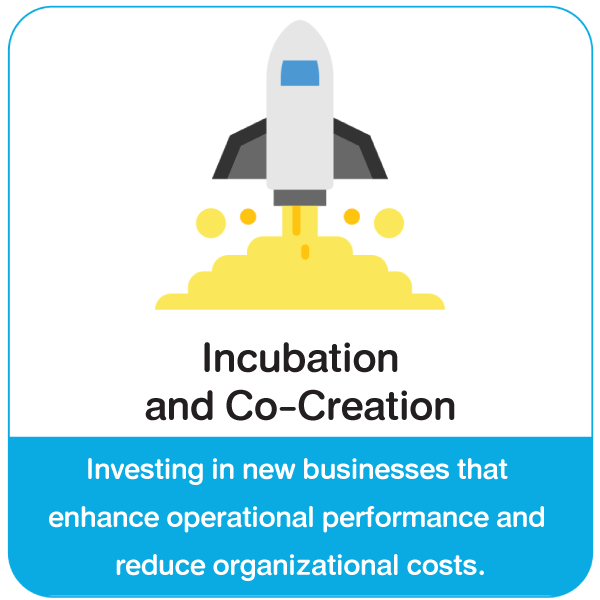
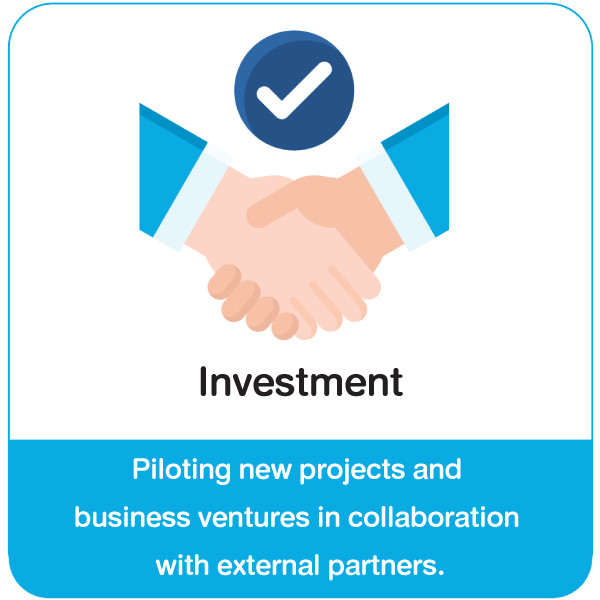
The Company places strong emphasis on driving business innovation as a key mechanism for creating added value, enhancing operational efficiency, and supporting sustainable growth. Innovation is promoted through multiple approaches, encompassing internal development, collaboration with external partners, and strategic investments, as outlined below:
Process Innovation
The Company places strong emphasis on enhancing employee capabilities and continuously developing process innovation. Clear management frameworks have been established to support learning, development, and the application of creativity to improve organizational operations, as outlined below:
Capability Enhancement and Experiential Learning
The Company is committed to strengthening workforce capabilities through a Learning by Doing approach, using the “Productivities” project as a project-based learning platform to foster analytical thinking and systematic problem-solving skills.
The Company has established advisory teams from the Process Transformation function and senior management to act as coaches and mentors, providing close guidance throughout planning, progress monitoring, and success evaluation. This initiative not only improves operational efficiency, but also cultivates a knowledge-sharing culture within the organization and encourages employees to develop measurable process innovations, including those that generate tangible economic value.
Performance Evaluation Across Three Key Dimensions
To ensure that the organization’s innovation strategy and execution deliver clear, tangible, and high-impact results, performance measurement criteria have been established across three key dimensions:
- Revenue Enhancement: Focuses on developing innovations that create new business opportunities in the market and enhance overall business competitiveness.
- Cost Reduction: Emphasizes improving resource management efficiency and reducing waste within operational processes.
- Satisfaction Improvement: Concentrates on enhancing service quality and speed to deliver the best possible experience for both internal and external customers.
Through a strategy that combines workforce capability development with clearly defined performance indicators, the Company is confident in its ability to create valuable innovations and drive strong, stable, and sustainable organizational growth over the long term.
Process Innovation
| Initiative | Objectives | Indicators/Targets | Performance |
|---|---|---|---|
| Improvement of the New Coffee Shop Setup Process (Punthai) | Streamline and accelerate the setup process for new store openings to support rapid branch expansion | Reduce new store setup time from 6 days to 3 days, in line with the expansion plan of 800–900 stores in 2025 and 1,000 stores in 2026 | Successfully completed setup within 3 days, with the following operational plan: Day 1: Inspection and requisition of equipment from the DC (100%) Day 2: On-site installation, setup, and defect resolution Day 3: On-site coaching for store staff and live operation of equipment |
| Generative AI Purchasing Department | Develop an AI chatbot system to expand communication channels with the Purchasing Department and enable users to independently access information | Reduce workload related to routine enquiries by deploying AI-based guidance and responses | The volume of general enquiry handling decreased, and employees adapted well to using the AI system |
Expansion into New Businesses Aligned with Sustainability
The Company has expanded its operations into new businesses aligned with the principles of sustainable development, with a focus on developing digital platforms that create added business value while enhancing operational efficiency, generating economic opportunities, and responding comprehensively to the needs of stakeholders. In this regard, the Company has implemented two key projects as follows:
1. 360 TRUCK Project
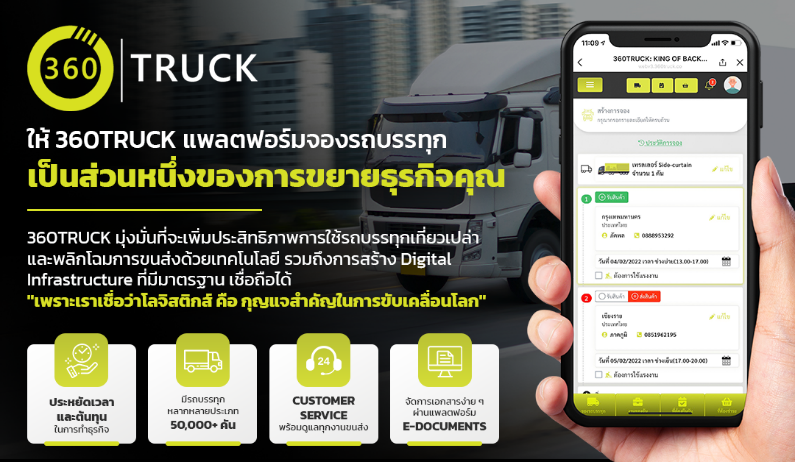
The 360 TRUCK Project is a logistics platform designed to enhance transportation management efficiency and reduce logistics costs for users, while supporting drivers and small-scale operators by enabling fair and transparent access to business opportunities.
Implementation Approach
- Development of a digital platform to improve logistics management efficiency and reduce transportation costs.
- Support for drivers and small-scale operators through the platform system to increase income-generating opportunities.
Performance Results

90%
.
20,000–30,000
drivers are active on the platform as regular operating drivers (Active Drivers).
30,000 transport
trips were managed in 2025, generating income circulation for drivers with an average freight rate of approximatelyTHB 8,000 per trip.

100,000 drivers
have registered on the platform to access increased income opportunities.2. Arincare Project
The Arincare Project is a healthcare platform aimed at expanding public access to healthcare services while sustainably enhancing the competitiveness of community pharmacies. The project integrates healthcare services, digital technology, and financial solutions.
Implementation Approach
- Development of a platform that improves access to healthcare services and enhances efficient pharmacy management.
- Strengthening the capabilities of community pharmacies to enable sustainable competitiveness.
- Integrating healthcare services, digital technology, and digital financial solutions to create an end-to-end healthcare ecosystem.

Performance Results

5,640 pharmacies
in 2025.
Total revenue increased significantly
, with MedEx (B2B) serving as the primary revenue base.
high-margin business segment

revenue growth alongside effective
cost management to maintain profit margins.
long-term business expansion.
Highlight Project
Uniform Upcycling Project
Background and Significance
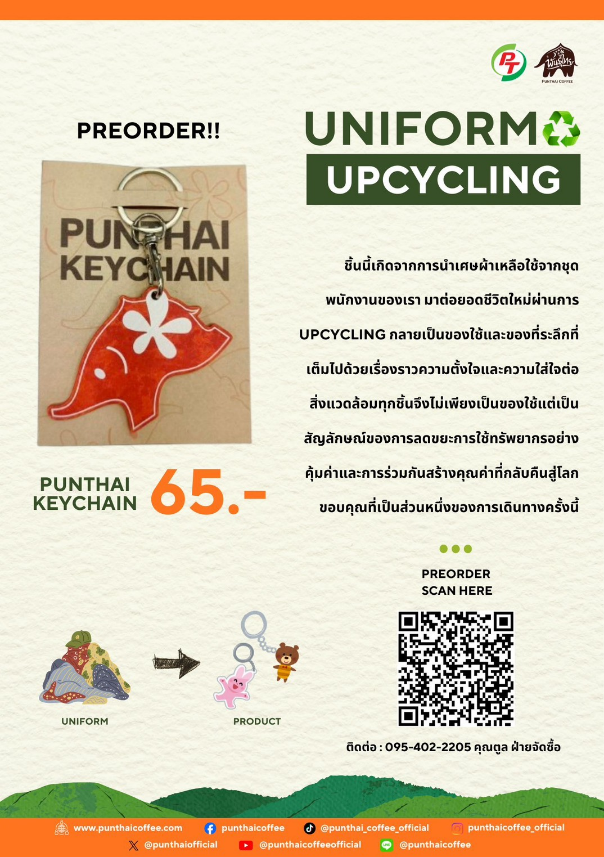
Through internal operations, the Company identified extensive use of cleaning cloths and textile materials in daily workflows, resulting in a continuous generation of textile waste. This not only creates waste management costs but also poses long-term environmental impacts. The “Uniform Upcycling” project was therefore initiated under the principles of efficient resource utilization and the Circular Economy, aiming to transform waste materials into value-added products. The project delivers environmental and economic benefits while promoting employee engagement, and reflects the Company’s tangible role in advancing sustainability through Kaizen activities.
Implementation Approach
The project began with the survey and segregation of textile waste and used cleaning cloths generated from the Company’s operations. These materials were then assessed for reuse potential and processed through a designed recycling and upcycling workflow to create value-added products. Cross-functional collaboration was established among operational units, environmental teams, and on-site employees to ensure participation throughout the process. Key performance indicators were defined, including waste reduction volume, greenhouse gas emission reduction, and economic returns, enabling systematic monitoring and evaluation of project outcomes.
Performance Results