
The Company conducts its business with a firm commitment to respecting human dignity and protecting the human rights of all stakeholders equally throughout its entire value chain.
Key Stakeholders Affected

Stakeholder Impact

Business Impact
Performance Against Targets
Statistics on cases where the Company was reported or legally charged for human rights violations
2025
2025
2027
Management Approach

The Company is committed to conducting its business in line with international human rights standards. Its framework is guided by the United Nations instruments and principles, including the Universal Declaration of Human Rights (UDHR), the United Nations Guiding Principles on Business and Human Rights (UNGP), and the Children’s Rights and Business Principles (CRBP), which are adapted to align with the Company’s business context. The Company respects and protects the human rights of employees, suppliers, customers, communities, and all stakeholder groups on an equal basis. A Human Rights Policy has been established as a guiding framework for employees at all levels and relevant stakeholders, alongside a Supplier Code of Conduct to promote compliance with human rights principles throughout the value chain. In parallel, the Company implements a comprehensive Human Rights Due Diligence (HRDD) process to assess and manage potential human rights impacts arising from its operations and supply chain. Communication and training programs are also provided to support effective implementation and foster continuous awareness.
Human Rights Policy
The Company has established a Human Rights Policy, affirming its commitment to respecting and protecting human rights in accordance with international principles and in compliance with applicable labor laws and related regulations. The policy outlines practical guidelines for employees to foster a culture of respect for human rights both within and beyond the organization. It covers the rights of employees, suppliers, customers, as well as communities and the environment. The Company expects its subsidiaries, affiliates, joint ventures, and business partners to adhere to the Company’s Human Rights Policy. The policy is clearly communicated to all stakeholders, including employees, communities, suppliers, and business partners. Key human rights issues emphasized include the prevention of discrimination, sexual harassment, child labor, and forced labor, among others, to ensure that business operations are conducted responsibly, fairly, and sustainably.
Human Rights PolicyHuman Rights Governance Structure
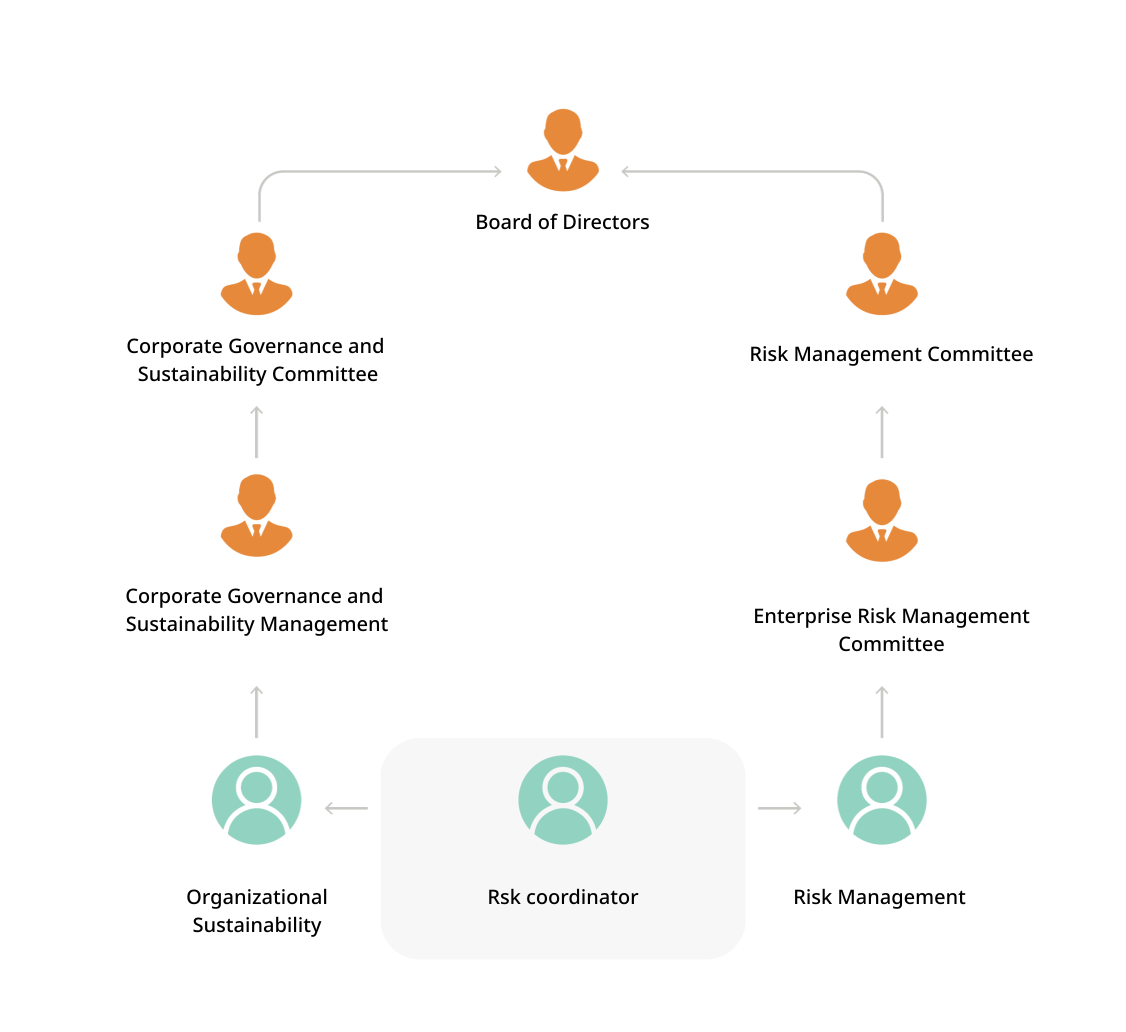
In addition, the Company assigns management-level personnel with knowledge and expertise in human rights to oversee day-to-day operations, aiming to prevent potential human rights violations in business activities and engagements with suppliers. Relevant functions include the People and Culture Division, Safety and Environment Department, Legal Department, and other related units.
Human Rights Due Diligence (HRDD)
The Company conducts Human Rights Due Diligence (HRDD) at least once a year, or whenever significant changes may affect risk levels, likelihood, or potential impacts. The assessment covers operations across the entire value chain and all stakeholder groups, including employees, suppliers and contractors, customers, communities, and the environment, as well as vulnerable groups such as women, indigenous peoples, migrant workers, LGBTQ+ individuals, disadvantaged persons, persons with disabilities, and children. The process includes scoping and planning the assessment; collecting baseline data and identifying human rights risk issues; evaluating the likelihood and severity of impacts; establishing and implementing mitigation measures; and reporting and reviewing action plans on an ongoing basis. A Human Rights Due Diligence Manual has also been developed to provide systematic guidance for assessing and managing the Company’s human rights risks.
Human Rights Due Diligence (HRDD) Manual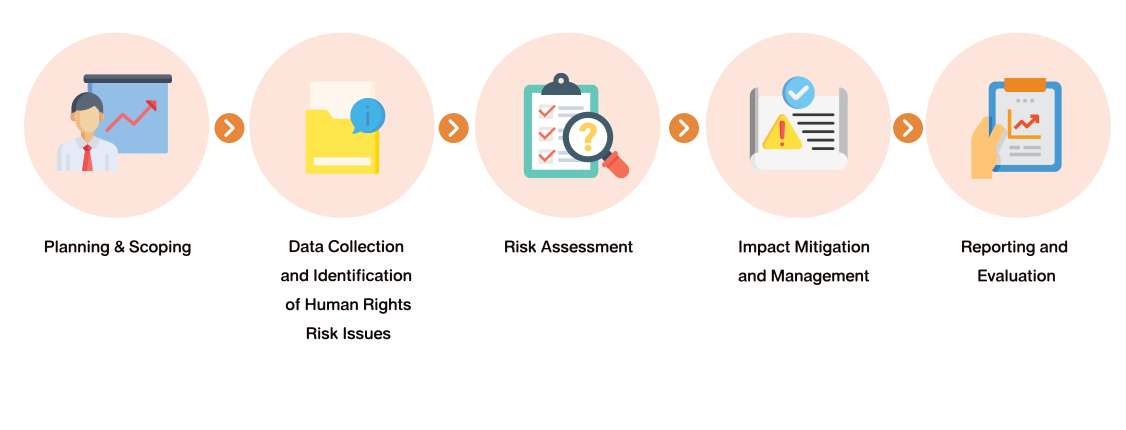
Human Rights Risk Assessment
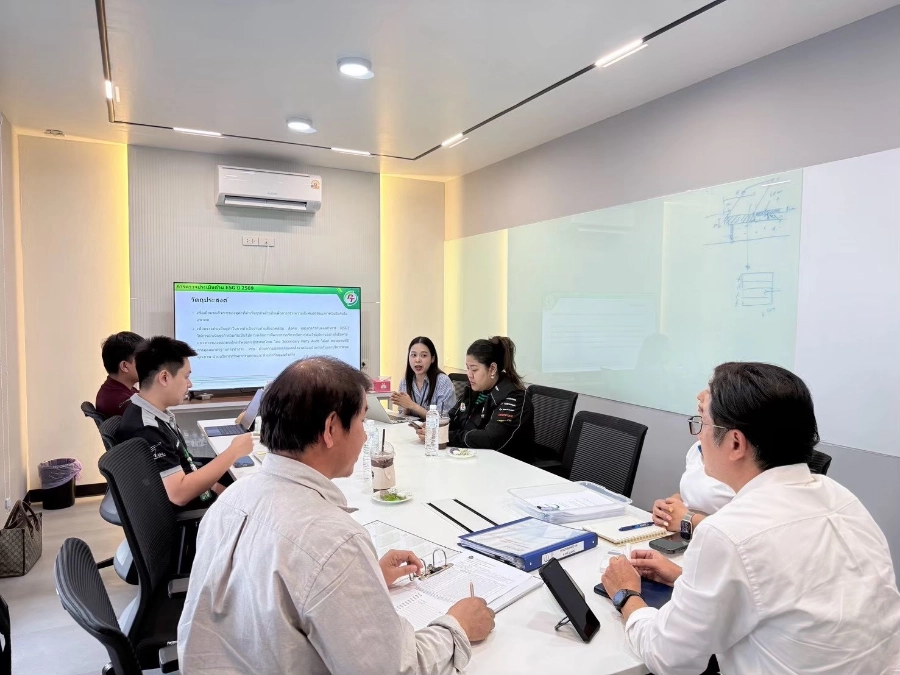
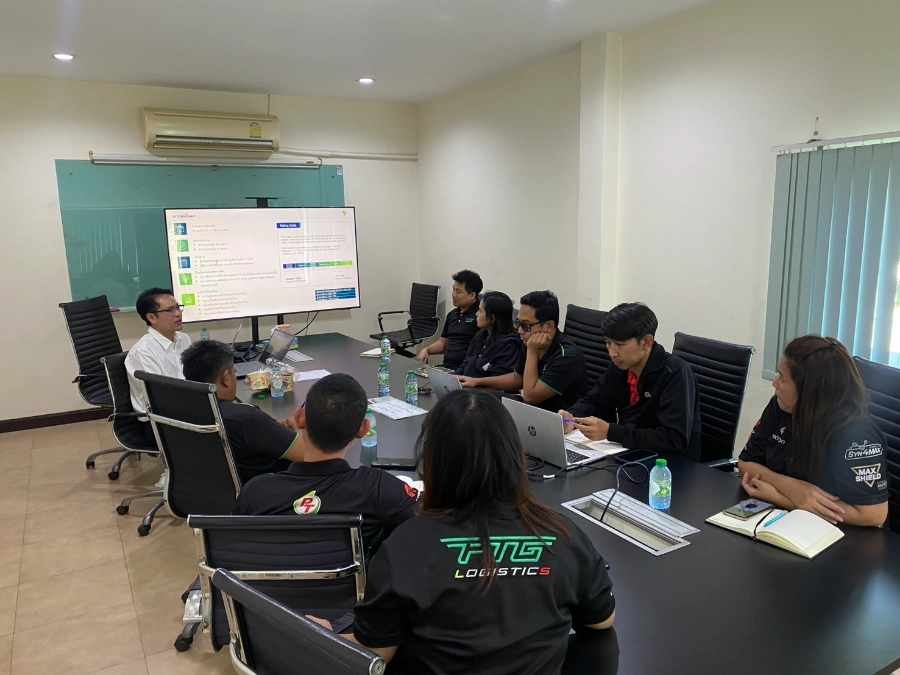
The Company conducts a Human Rights Risk Assessment (HRRA) by applying an internationally aligned framework tailored to its organizational context. The objective is to identify, analyze, and prioritize human rights issues that may arise from business operations, covering the rights of employees, customers, suppliers and contractors, as well as communities and the environment throughout the value chain.
The assessment process integrates stakeholder engagement through human rights questionnaires, addressing key issues such as respect for human rights, non-discrimination, equality in labor practices, labor rights, community impacts, and land and livelihood concerns. Feedback from stakeholders is considered alongside an evaluation of the likelihood and severity of potential impacts. The assessment scope covers the Company’s operations, Tier I suppliers and contractors, as well as joint ventures. The results serve as a foundation for establishing preventive measures, management plans, and monitoring mechanisms to prevent and mitigate adverse impacts, while promoting human dignity, equality, and diversity as fundamental drivers of sustainable growth.
Human Rights Risk Assessment Results
In 2025, the Company conducted a comprehensive Human Rights Due Diligence assessment covering its operations, Tier I suppliers and contractors, as well as joint ventures. The assessment identified salient human rights issues that are considered significant to the Company’s business operations. Nevertheless, the Company remains committed to the continuous prevention and effective management of human rights risks. Relevant policies, guidelines, and oversight measures have been established to ensure that business operations respect human rights throughout the value chain. These include communicating the Human Rights Policy to employees, suppliers, and relevant stakeholders; monitoring compliance with applicable laws, regulations, and requirements; and providing guidance and support to relevant functions to further enhance the Human Rights Due Diligence process in alignment with appropriate international standards and best practices.
Human Rights Issues Related to Company Operations
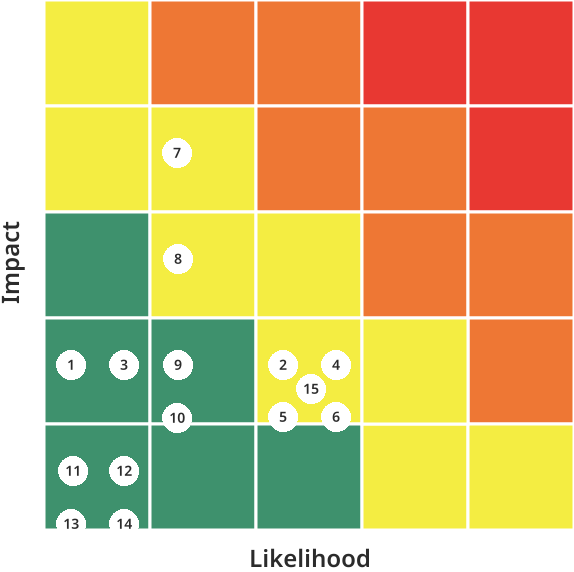
Employee Rights
- 3 Discrimination
- 6 Occupational health and safety
- 11 Employee data privacy
- 12 Employment conditions, such as labor rights, fair employment, compensation, and benefits
- 13 Freedom of association and collective bargaining
- 14 Illegal labor practices, such as forced labor, child labor, and migrant labor
Community and Environmental Rights
- 4 Community health and safety
- 7 Standard of living and quality of life
- 8 Access to water and sanitation
- 9 Land acquisition
Supplier and Contractor Rights
- 1 Discrimination
- 15 Contractor health and safety
Customer Rights
- 2 Discrimination
- 5 Customer health and safety
- 10 Data privacy
Human Rights Risk Assessment Results of PTG Group and Joint Ventures
| Assessment Scope | PTG Group1/ | Joint Ventures2/ |
|---|---|---|
| Percentage of business activities and operational sites assessed for human rights risks | 100% (6 out of 6 site) |
100% (1 out of 1 site) |
| Percentage of business activities identified as having high human rights risks | - | - |
| Percentage of business activities identified as having moderate human rights risks | 43% | 27% |
| Percentage of salient human rights issues with mitigation plans | 100% (6 out of 6 site) |
100% (1 out of 1 site) |
Notes:
1/ Scope covering PTG Energy Public Company Limited, Petroleum Thai Corporation Company Limited, PTG Logistics Company Limited, GFA Corporation (Thailand) Company Limited, Punthai Coffee Company Limited, and Siam Autobacs Company Limited.
2/ Scope covering PPP Green Complex Public Company Limited.
Human Rights Risk Assessment Results of Suppliers
| Description | Assessment Result |
|---|---|
| Percentage of direct and key suppliers assessed for human rights risks | 73.68 |
| Percentage of suppliers identified as having high human rights risks | 31.58 |
| Percentage of suppliers with high human rights risks that have preventive and mitigation measures in place | 100.00 |
Note: The Company assesses suppliers’ human rights risks every three years.
Human Rights Impact Mitigation, Management Measures and Remediation
| Human Rights Issues | Risk Level | Risk Management Measures | Remediation |
|---|---|---|---|
| Employee Rights | |||
| Employee Health and Safety (Health and Safety) |
Medium |
|
|
| Community and Environmental Rights | |||
| Community Health and Safety (Health and Safety) |
Medium |
As a result of these measures, no significant community health and safety impacts have been identified. |
|
| Community Standard of Living and Quality of Life (Community Standard of Living) |
Medium |
As a result of these measures, no significant impacts on the standard of living or quality of life of surrounding communities have been identified. |
|
| Community Access to Water and Sanitation (Community Access to Water and Sanitation) |
Medium |
As a result of these measures, no significant impacts on community access to water and sanitation have been identified. |
|
| Customer Rights | |||
| Discrimination Against Customers (Discrimination) |
Medium |
|
|
| Customer Health and Safety (Health and Safety) |
Medium |
|
|
The Company places great importance on preventing harassment and discrimination in the workplace, upholding the principles of fair employment, respect for internationally recognized human rights, and compliance with applicable labor laws. To this end, the Company has implemented a Human Rights Policy, Code of Conduct, and a Policy on the Prevention of Harassment and Non-Discrimination in the Workplace, along with related work regulations. These frameworks are designed to prevent all forms of harassment, whether physical, verbal, or sexual, and to foster a culture of non-discrimination in recruitment, development, and career advancement, regardless of gender, gender identity, race, religion, age, or physical condition. In addition, the Company has established whistleblower protection measures and personal data protection mechanisms to safeguard complainants and ensure confidentiality. These efforts support a working environment that respects human dignity and promotes diversity and equality in a sustainable manner.
Anti-Harassment and Non-Discrimination PolicyMeasures for Addressing Harassment and Discrimination in the Workplace
The Company implements preventive measures by regularly communicating its Anti-Harassment and Non-Discrimination Policy and conducting training programs to enhance knowledge, understanding, and awareness among employees at all levels. In cases where complaints of harassment or discrimination arise, the Company follows a clear, transparent, and fair grievance handling process. An impartial committee is appointed to promptly investigate the matter while maintaining strict confidentiality. Whistleblowers and witnesses are protected, and appropriate remedies are provided to affected individuals. Disciplinary actions are imposed in accordance with the Company’s work regulations, ranging from warnings to termination of employment, depending on the severity of the misconduct. Legal action will be pursued in cases involving criminal offenses. These measures reinforce a corporate culture that upholds human rights and workplace equality.
The Company requires that procedures for addressing harassment and discrimination in the workplace be carried out in accordance with the established steps outlined in the Company’s work regulations. Clear disciplinary measures are defined for individuals who commit acts of harassment or discrimination, as follows:
Disciplinary Measures
The Company is committed to upholding human rights, equality, and human dignity by ensuring that recruitment, management, and performance evaluation are based solely on merit, without discrimination in any form, including gender and gender identity. Equal opportunities are promoted for employees of all genders across various functions and position levels. The Company also fosters an inclusive organizational culture that respects gender diversity through initiatives such as Pride Month activities, supporting sustainable equality and non-discriminatory practices in the workplace.
Junior Management
Top Management
Revenue-Generating Functions
Related to Science, Technology, Engineering,
and Mathematics (STEM)

The Company respects employees’ freedom of association and collective bargaining in accordance with labor laws. A Welfare Committee, comprising 100% employee-elected representatives, is established to serve as a channel for reflecting employees’ opinions and needs, and for engaging in dialogue with management.
The Company conducts labor relations based on transparent and fair bilateral principles, carefully reviewing proposals to find a balance between employees’ expectations and the organization’s capabilities.
This approach contributes to enhanced employee welfare and quality of life, reduces labor disputes, and fosters sustainable and positive employer-employee relationships.
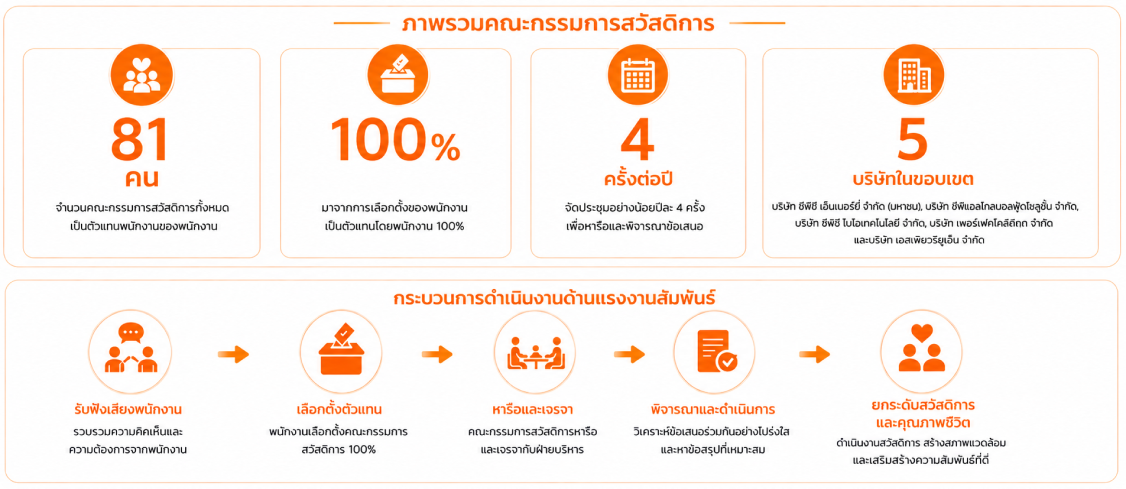
Note: The Welfare Committee covers the following companies: PTG Energy Public Company Limited, Petroleum Thai Corporation Company Limited, PTG Logistics Company Limited, Punthai Coffee Company Limited, and Max Solution Service Company Limited.
Human Rights Grievance Process
The Company provides channels for employees and stakeholders to express their opinions, raise concerns, and submit tips or complaints in cases involving human rights violations or breaches of the Code of Conduct by employees or other stakeholders. All complaints are managed appropriately and fairly. The Company ensures the protection of individuals who report human rights violations related to the Group by maintaining the confidentiality of whistleblowers’ information and implementing the highest level of protection measures for those who report or cooperate in reporting human rights violations.

The Company places strong emphasis on continuously enhancing knowledge, understanding, and communication on human rights. It aims to strengthen the capabilities of supervisors and employees at all levels to ensure fair, appropriate, and human rights-aligned management and treatment of employees. Key initiatives undertaken during the past year include:
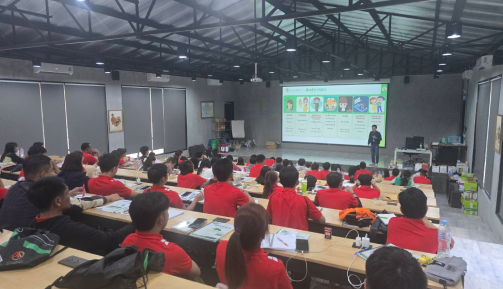
HR On Tour Program
A series of hands-on workshops was conducted for supervisors working in operational areas, covering service stations nationwide across 10 regions. The program totaled 150 training hours, with supervisors from 1,678 branches participating.
Post-training knowledge assessments recorded an average score of
95.52%
while participant satisfaction reached
98.67%
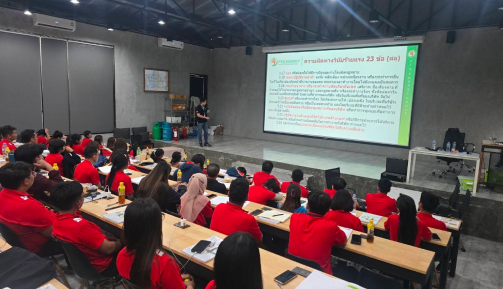
Labor Law and Human Rights Training for New Supervisors
This program provided training on labor law, labor relations, and human rights, delivered by specialists from the Employee Relations and Internal Communications Department. The objective was to equip supervisors with the knowledge required to manage subordinates appropriately, prevent labor rights violations, and understand their own rights and responsibilities. During the past year, 12 training sessions were conducted
with 1,078 participants, achieving an average passing score of
90.67%

New Employees
For new employees, the Company requires human rights training as part of the onboarding process prior to commencing work. All new employees completed the training at a rate of 100% to ensure a proper understanding of their rights, responsibilities, and workplace practices from the outset.
In addition, the Company continuously communicates human rights and labor relations matters through internal channels such as the corporate Intranet and company email. These platforms are used to disseminate policies, guidelines, and relevant notifications to employees at all levels, including executives, thereby reinforcing awareness and promoting consistent adherence to human rights principles across the organization.
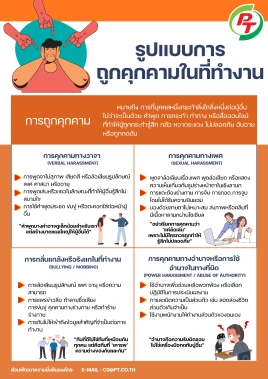
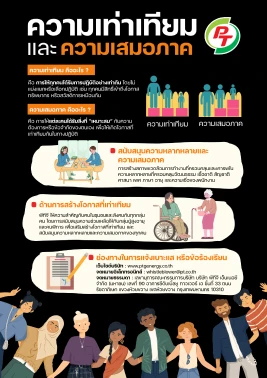
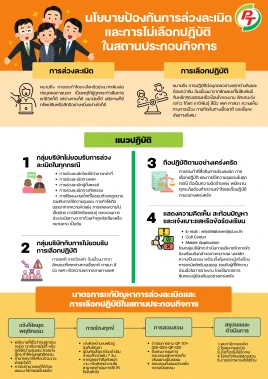
Human Rights Training Course
Fundamental Employee Rights
Fundamental Employee Rights
Prevention of Human Rights Violations
Human Rights Operations in Alignment with International Standards
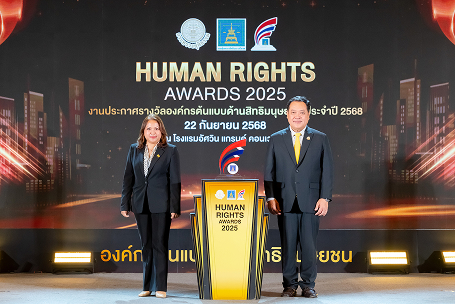
The Company is committed to enhancing its human rights performance in alignment with international standards by actively participating in and contributing to government mechanisms and networks that promote labor standards and quality of life in the workplace. These include serving as a member and working committee of the Bangkok Area 5 Labor Protection and Welfare Office, participating as a committee member with labor-related authorities, acting as a network partner for the Happy Workplace Program with the Thai Health Promotion Foundation (ThaiHealth), contributing to the selection committee for the Outstanding Women Awards of the Ministry of Labor, and participating in initiatives promoting drug-free workplaces and elderly worker welfare programs. These efforts aim to create a safe, fair, and supportive working environment that enhances employees’ quality of life.