

The Company is committed to enhancing proactive risk and crisis management through an operational framework aligned with international standards and ESG best practices. This approach aims to strengthen confidence among all stakeholder groups by integrating globally recognized risk management principles and embedding risk awareness as part of the corporate culture. Through effective risk governance, the Company seeks to create added value, enhance adaptability to change, deliver sustainable outcomes for all stakeholder groups, and support the Company’s sustainable growth over the long term.
Key Stakeholders Affected

Stakeholder Impact

Business Impact
Risk Management Structure
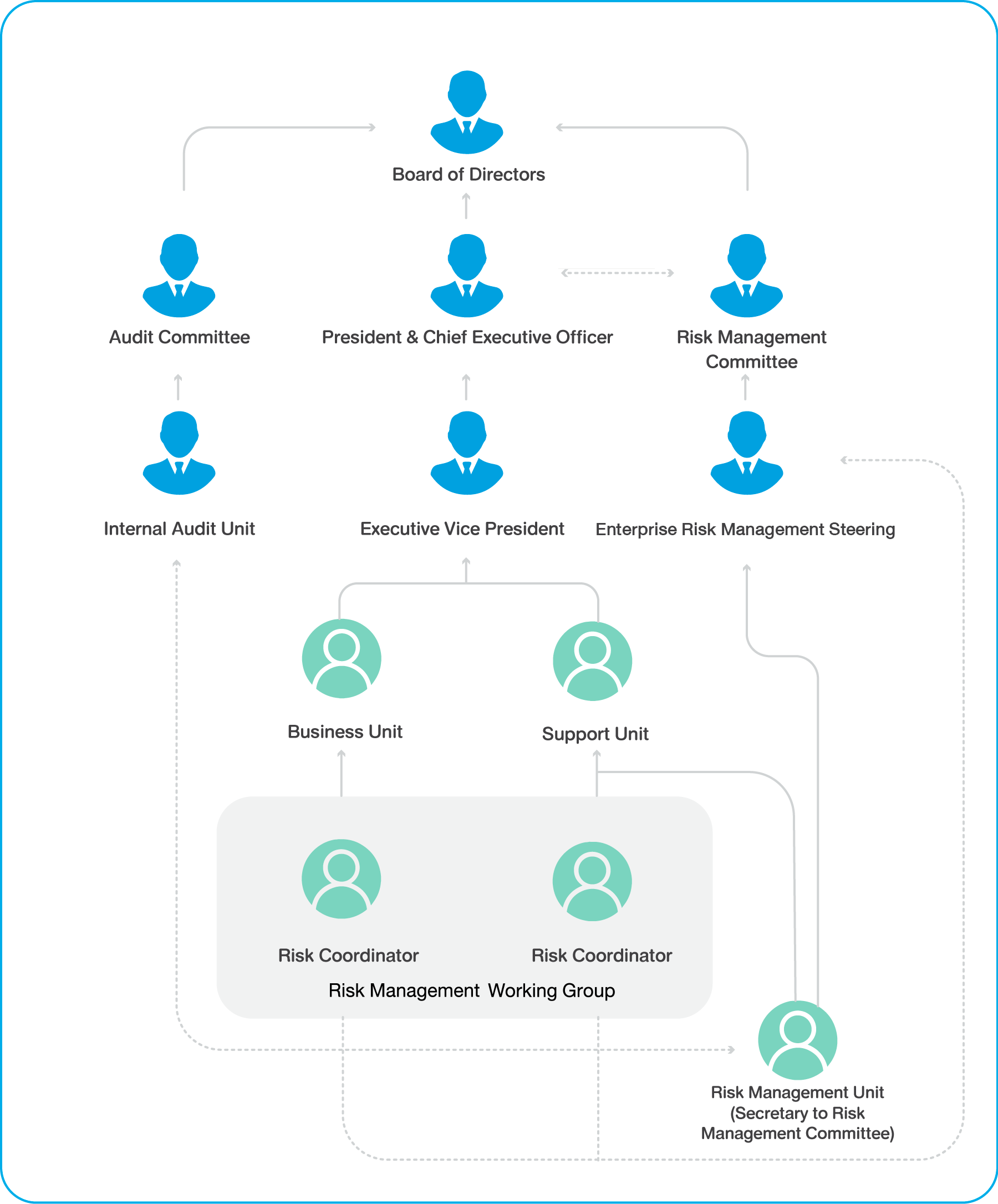
The Company has established a clear and systematic risk management structure to support good corporate governance and sustainable business operations. The Company has appointed a Risk Management Committee consisting of Company directors, as well as an Enterprise Risk Management Steering comprising Executive level members.
The Risk Management Committee is responsible for defining risk management policies and frameworks, overseeing and supporting risk management activities to ensure alignment with the Company’s strategy and objectives, driving tangible outcomes, and promoting risk management as an integral part of the corporate culture at all levels to enhance comprehensive and effective risk management. The Enterprise Risk Management Steering serves as the second-line governance body at the executive level. The Steering Committee is responsible for driving risk frameworks and control standards, monitoring risk exposures, and overseeing organization-wide compliance to ensure that the organization operates effectively to achieve its strategic objectives and goals.
The Company has established a Risk Management Working Group, a subcommittee composed of Risk Coordinators from each department. Functioning as the Operational Risk Owners (First Line), these Risk Coordinators are directly embedded within daily operations to proactively identify, analyze, assess, and manage operational risks at the process level. Their core responsibilities include implementing control measures, executing risk mitigation plans, monitoring and regularly reporting both departmental and enterprise-level risks to ensure line-of-sight risk management throughout the organization.
The Risk Management Function serves as the secretary to the Risk Management Committee, the Enterprise Risk Management Steering, and the Risk Management Working Group, and provides ongoing support for the Company’s risk management activities.
In addition, operating as the third line of defense, the Internal Audit Unit functions independently of management to provide objective assurance on the effectiveness of the Company’s risk management processes. It regularly conducts independent audits across all business units to evaluate internal controls and reports directly to the Audit Committee.
However, The Risk Management Committee regularly reports risk status, analysis, assessment, and mitigation measures to the Board of Directors and the Audit Committee to ensure that risk management objectives are achieved effectively and sustainably in both the short and long term
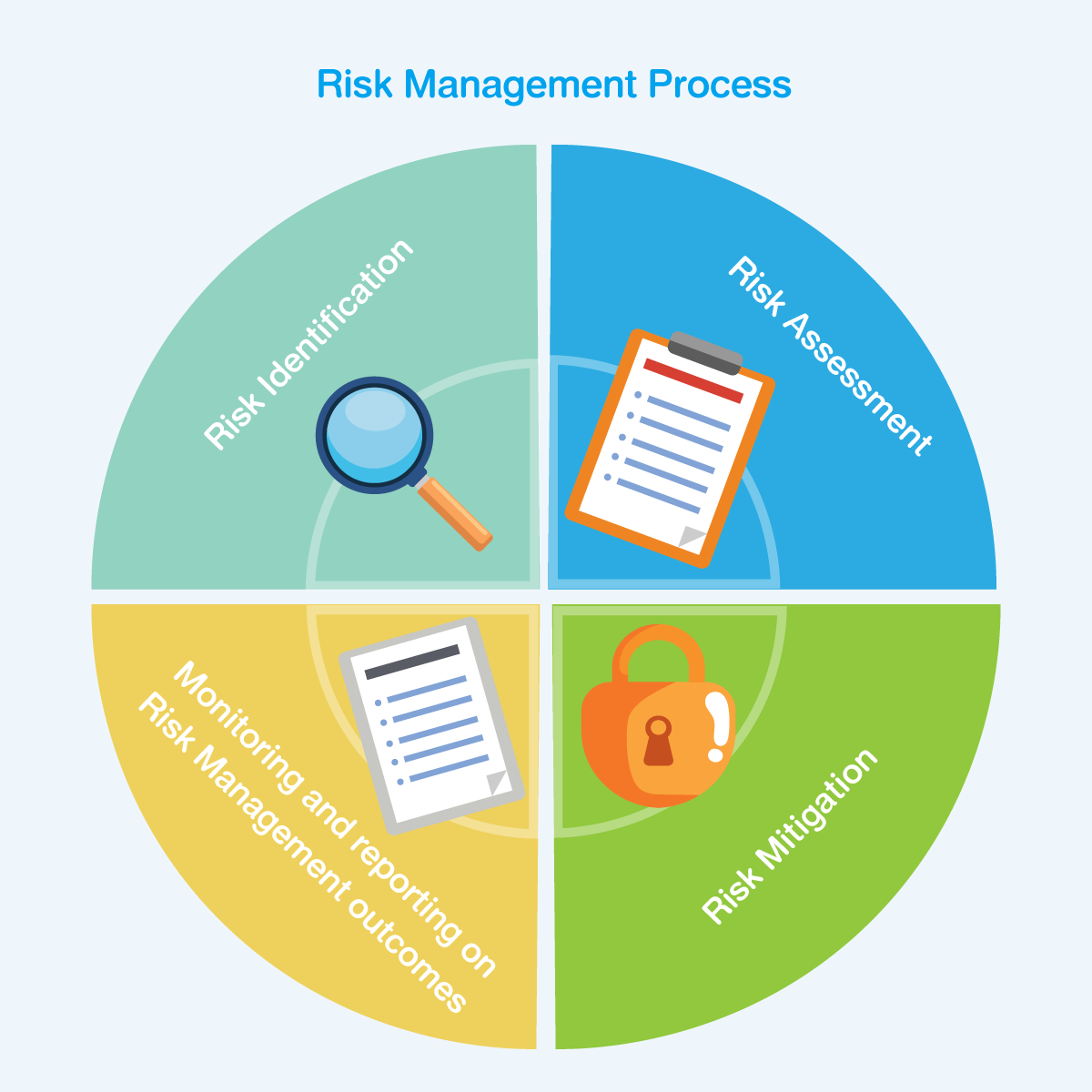
1. PTG Risk Management Process
Principles and Approach to Risk Prevention
Measures to Improve Risk Management Practices
PTG has implemented risk management measures that primarily cover structured response processes. Feedback, recommendations, and comments from the Board of Directors or management regarding risks identified during the risk management reporting process are communicated to the risk managers / risk owners and relevant parties for further action.
In addition, PTG conducts a “functional risk criteria review process”, which addresses deviations in risk levels and promotes employee participation in continuously improving risk management practices across the organization.
Internal Control Mechanisms and Risk Monitoring
The Company regularly reviews and assesses enterprise risks at least once a year, with additional reviews conducted when significant changes affecting business operations occur or when material events arise. The risk assessment covers strategic, operational, financial, legal, and ESG-related risks to ensure that risks are managed and responded to appropriately and in a timely manner.
The Company has established standardized internal control systems and risk management processes to serve as a common framework for all employees to follow and actively participate in risk management practices. Each business unit is required to recognize operational risks and is responsible for identifying, assessing, managing, and continuously monitoring and reporting risks within its respective processes. Risk management performance at both the enterprise and business unit levels is monitored and reported to the Enterprise Risk Management Working Group and the Risk Management Committee at least on a quarterly basis. This enables effective oversight and supports the achievement of the Company’s risk management objectives. In addition, risk management reports are regularly submitted to the Board of Directors and the Audit Committee to ensure transparent and effective governance. The Company continuously reviews and enhances its risk management processes to align with the COSO Enterprise Risk Management framework and the evolving business environment. Furthermore, the Company undergoes an annual external audit to validate the adequacy and effectiveness of its internal controls and risk management processes in supporting sustainable organizational growth.
Risk Management in New Product and Service Development
The Company integrates risk management into the planning and investment consideration processes for new projects. Each new investment project is required to undergo risk analysis and assessment, along with the preparation of a project risk management plan. The risk assessment results for new investment projects are presented to the Executive Committee, the Company-level Investment Committee, and the Board of Directors to support informed decision-making. In addition, risk considerations are incorporated into the development of operational processes and new products, with relevant executives and committees evaluating associated risks as part of the approval process.
For branch expansion and the development of new services, the Company has established governance mechanisms through dedicated committees and working groups. For example, a New Service Station Opening Committee is appointed to assess investment feasibility, site acquisition information, compliance with applicable laws and regulations, and project implementation progress. The committee also regularly reviews risks related to branch expansion and new service development, and uses the assessment results to continuously review and improve action plans. These practices help mitigate risks and ensure that decision-making is prudent, transparent, and aligned with the Company’s strategic objectives, thereby supporting efficient and sustainable business expansion.
Environmental, Social, and Governance (ESG) Risk
The Company recognizes and places importance on the potential impacts arising from its operations across the environmental, social, and governance (ESG) dimensions, which may affect future business operations, stakeholder confidence, and long-term sustainable value creation. The Board of Directors has therefore assigned the Risk Management Committee to oversee and manage sustainability-related risks (ESG Risk), integrating them systematically into the Company’s Enterprise Risk Management (ERM) framework. The Company conducts risk identification and assessment processes, and establishes mitigation measures, action plans, and relevant projects to address potential impacts arising from such risks in the short, medium, and long term, as follows:
1. Risk of potential environmental impacts
| Risk Categories | Impacts | Measures |
|---|---|---|
| Operational and Compliance Risk |
The Company’s business operations may involve certain activities that generate environmental impacts, particularly greenhouse gas (GHG) emissions arising from operational processes. These include activities such as oil terminal operations and fuel transportation, which are sources of carbon dioxide emissions contributing to climate change and global warming. If the Company is unable to effectively manage and control its greenhouse gas emissions, this may adversely affect its corporate image, credibility, and the confidence and expectations of stakeholders in the long term. Furthermore, greenhouse gas emissions that exceed regulatory thresholds or government requirements may result in additional cost burdens, such as carbon tax obligations or other environmental measures. These could increase operating expenses and negatively impact the Company’s financial position. |
|
| Risk Appetite: Conduct business operations with due consideration for quality, safety, social and environmental impacts, while driving the organization toward its Carbon Neutrality goal. |
||
2. Risk arising from business operations that may cause impacts on communities and society
| Risk Categories | Impacts | Measures |
|---|---|---|
| Operational Risk |
The Company operates in the energy business, specifically in fuel oil and LPG, with primary consideration given to the safety of communities, society, and the environment. The Company regularly assesses risks and potential impacts arising from changes in both external and internal environments in order to improve operational processes and develop additional mitigation plans. It has also continuously enhanced and upgraded its safety and environmental standards. However, if employees perform their duties negligently, accidents such as leaks, explosions, or fires may occur. Such incidents could result in damage to life and property in communities near operational sites and may significantly affect the Company’s reputation, financial position, and operating results. |
|
| Risk Appetite: Conduct business operations in accordance with established standards without causing adverse impacts on society, while prioritizing quality, safety, and social responsibility. |
||
3. Risk arising from compliance with laws, regulations, rules, and policies related to business operations
| Risk Categories | Impacts | Measures |
|---|---|---|
| Compliance Risk |
The Company’s business operations may face risks arising from non-compliance or incomplete compliance with applicable laws, regulations, rules, and policies. Such risks may result from the complexity of legal provisions, ongoing changes in legislation, misinterpretation, or the enforcement of new laws and requirements. Examples include the Personal Data Protection Act, B.E. 2562 (A.D. 2019) (PDPA), Environmental, Social, and Governance (ESG) policies, as well as greenhouse gas emission control measures under international frameworks (COP26–27). These factors may lead to non-compliant operations and could adversely affect the Company financially and operationally, as well as impact its credibility and corporate reputation. Failure to properly manage and oversee such risks may result in legal penalties, including fines, suspension, or revocation of business licenses. |
|
| Risk Appetite: Operate in full compliance with applicable laws, regulations, requirements, and business standards, and conduct business with transparency and accountability. |
||
Corruption Risk (CAC)
The Company recognizes the risk of corruption that may arise from its business operations. It therefore conducts risk assessments, establishes preventive and control measures, and regularly monitors and reviews such risks to promote transparent, fair, and good governance practices. The Company emphasizes corruption risk assessments across its entire supply chain, covering business units whose duties or activities may involve interactions with government agencies. Operational activities that may pose risks related to the offering or receiving of benefits, potentially leading to corruption, are identified and assessed. Each risk is evaluated based on its likelihood and impact, with appropriate risk mitigation measures implemented accordingly. Additionally, corruption risks are reviewed on a regular basis.
In 2025, the Company completed corruption risk assessments for 100% of its internal business units subject to such evaluation and 93% of its subsidiaries required to undergo corruption risk assessment. The assessment results identified no material corruption risks. The Company continues to strictly implement its anti-corruption measures to strengthen transparency and ethical business conduct. In addition, the Company has been certified for the third consecutive term under Thailand’s Private Sector Collective Action Coalition Against Corruption (CAC), endorsed by the Thai Institute of Directors Association (IOD).
Interncal Dept Risk Assessment
Subsidiary Risk Assessment
No material fraud risk issues were identified.

Ongoing Actions
Continuously implement anti-corruption measures to ensure transparency in business operations.

Recognition
Received CAC (Collective Action Coalition) certification for the third consecutive time from the IOD.
1. Emerging Risks
The Company places great importance on identifying and assessing emerging risks to remain responsive to continuously evolving business challenges. Such risks may potentially affect the Company’s competitiveness, financial position, operating performance, and stakeholder confidence in the future. To manage emerging risks—factors that may not yet have occurred or for which limited information is available—the Company continuously monitors signals of change across political, economic, social, environmental, legal, technological, and global trend dimensions. These insights are analyzed to identify and assess potential risks over the short, medium, and long term. This proactive approach enables the Company to implement timely mitigation measures, minimize potential future impacts, and identify new opportunities to drive business growth amid an ever-changing environment.
1. Global Geopolitical Uncertainty RiskMedium-term Risk
| Categories: |
|
| Duration: | Medium-term Risk |
| Description: |
Prolonged and intensifying geopolitical tensions and conflicts around the world, such as the conflicts in the Middle East and between Russia and Ukraine, have significantly affected global peace and international security. At the same time, increasing polarization among major powers, particularly between the United States and China, in both economic and technological spheres has led to the formation of trade blocs and the adoption of protectionist trade policies aimed at safeguarding national interests. In recent years, globalization has further amplified these risks by deepening the interconnections among global economies and societies. These factors have emerged as significant new risk drivers, materially affecting global economic stability and energy security. Unlike normal oil price fluctuations driven by market mechanisms, these risks stem from severe and unpredictable external factors that are becoming increasingly complex. They may lead to uncertainty in global energy supply. Should international conflicts escalate further, resulting in targeted attacks or sanctions on energy and transportation infrastructure in major oil-producing regions, this could cause sudden disruptions in oil production or transportation, as well as broader supply chain disruptions. Such events may lead to oil shortages and sharp spikes in oil prices within a short period, potentially triggering a global energy crisis. These developments underscore that geopolitical conflicts continue to heighten uncertainty for both the global and Thai economies. Businesses must therefore prepare comprehensively for the impacts of geopolitical shifts and enhance their strategic flexibility to respond swiftly to rapid changes. This adaptability is a critical factor in maintaining long-term business stability and sustainability. |
| Impacts: |
If the Company continues to face prolonged global geopolitical conflicts without appropriate mitigation measures, its business operations may be adversely affected in several areas, including cost management, supply chain stability, as well as corporate image and stakeholder confidence, as detailed below:
|
| Management Measures: |
The Company recognizes the emerging risks and has proactively prepared to mitigate and manage potential impacts. It has established management approaches to minimize business disruption and maintain corporate stability on an ongoing basis, as follows:
|
2. Legal and Carbon Reduction Pressure Risk
| Categories: |
|
| Duration: | Medium-term Risk |
| Description: |
In response to government policies supporting Thailand’s transition toward net zero carbon emissions, national targets have been established under the National Energy Plan (NEP) and the Power Development Plan (PDP 2024–2037) to reduce greenhouse gas (GHG) emissions in three phases as follows:
To support these targets, the government has proposed the Climate Change Act of Thailand and related subordinate legislation, which may introduce a carbon pricing mechanism, such as a carbon tax or an Emissions Trading System (ETS) for the energy sector. There is also a possibility that business operators will be required to report greenhouse gas emissions and develop systematic emission reduction plans. Furthermore, stricter policies or regulations than previously anticipated (particularly those related to fossil fuel use) may be enacted. These could include restrictions on fossil fuel consumption in certain areas or vehicle categories, the imposition of emission caps, and increased support for investment in renewable energy and clean technologies, such as Energy Storage Systems (ESS), hydrogen, and electric vehicles (EVs). At the same time, the government continues to promote domestic carbon market mechanisms, such as T-VER. Although currently voluntary, this reflects a potential transition toward mandatory mechanisms in the future. The global trend toward energy transition is also intensifying, driven by international commitments, investor expectations, and shifting consumer preferences toward clean energy and ESG considerations. Even if Thai companies are not direct exporters, international measures, such as the EU’s Carbon Border Adjustment Mechanism (CBAM) or Green Finance Taxonomies in Japan or China, may influence regulatory standards that Thailand will need to adopt. These developments could affect long-term demand for oil and fossil fuels and increase pressure on energy operators to adapt in response to national policies and growing environmental and sustainability expectations. |
| Impacts: |
If the Company generates high levels of carbon dioxide emissions contributing to greenhouse gases without appropriate control or management measures, it may face impacts in several areas, including:
|
| Management Measures: |
The Company is committed to reducing carbon dioxide emissions and has established a climate change management strategy aligned with the National Energy Plan, targeting carbon neutrality by 2030.
|
Risk Culture and Awareness Building
Strategies to Promote an Effective Risk Management Culture Across the Organization
The Company is committed to supporting and fostering a strong risk management culture throughout the organization. It continuously enhances the knowledge and understanding of risk management processes and practices among the Board of Directors, executives, and employees. Educational materials and communications containing insights on risk management and key risk factors are regularly prepared and disseminated to employees at all levels. Risk updates are also communicated to executives to keep them informed of emerging and ongoing risk situations. In addition, risk management topics are incorporated into the orientation program for new employees to ensure that awareness and understanding of risk management are established from the start of their employment.
The Risk Management Working Team, comprising representatives from various departments, is responsible for coordinating with the Risk Management Department to cascade risk management policies and processes into operational practice across the organization. The team monitors the implementation of risk management processes within each department, including risk identification, analysis, assessment, mitigation, and reporting. This approach ensures that all departments recognize the risks associated with their operations and integrate risk management into their daily activities. The objective is to instill awareness, accountability, and active participation in risk management at all levels, embedding it into the corporate culture and contributing to value creation for the organization and its stakeholders.
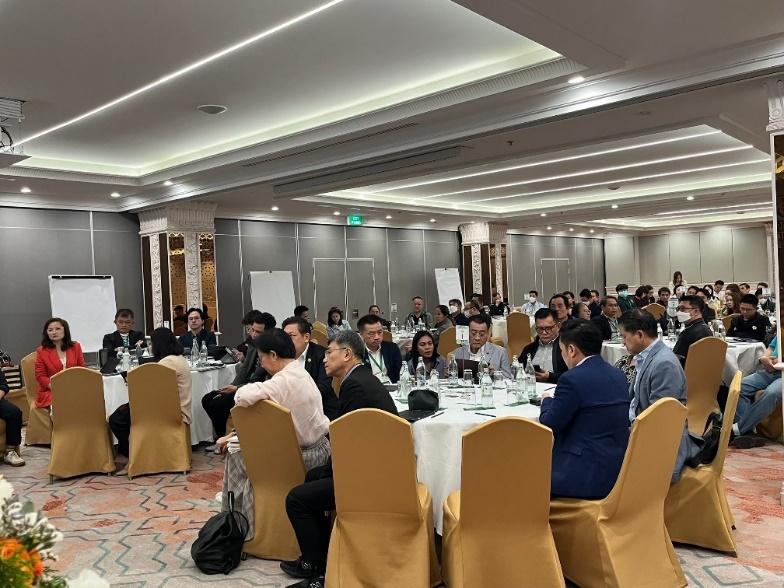
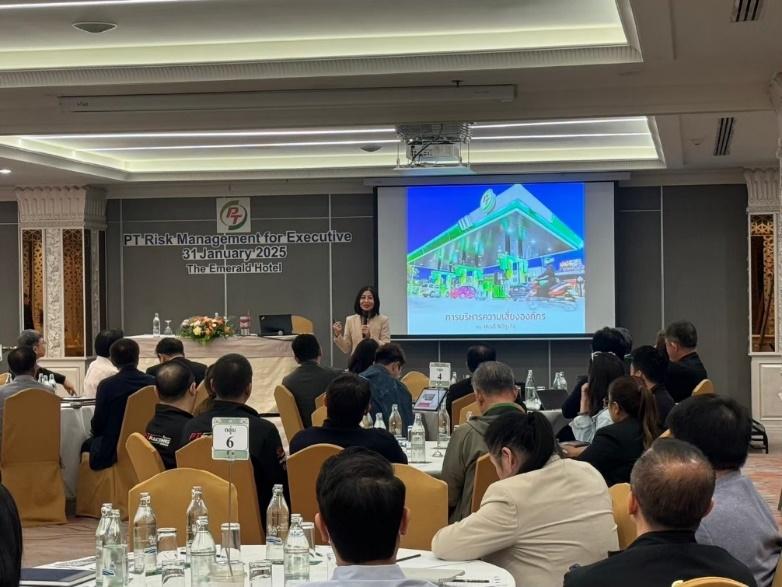
In 2025, the Company conducted risk management training sessions for the Board of Directors (including non-executive directors) and senior executives to enhance their understanding of applying risk management principles to organizational operations. In addition, the Risk Management Department organized its annual training program for the Risk Management Working Team and employees to strengthen their knowledge and understanding of internal risk management practices.
Risk Management Indicators for Executives
In managing enterprise risk, PTG has established Key Risk Indicators (KRIs) to monitor and measure the effectiveness of risk management at the enterprise level. These KRIs include both financial and non-financial indicators.
The financial KRIs are generally aligned with the organization’s performance evaluation metrics and are cascaded to executives at each management level. As a result, financial KRIs are linked to financial incentives, which help drive employees across the organization to prioritize risk management in order to achieve the defined objectives.
For enterprise-level risk management, targets are set to reduce risk exposure based on the metrics used to assess risk levels. The effectiveness of risk mitigation measures is monitored on a quarterly basis or whenever there are significant changes, in order to ensure that risk management remains efficient and effective, and is aligned with the organization’s strategic objectives and goals, covering both financial and non-financial aspects.
Measuring the Effectiveness of Risk Culture
The Company continuously monitors and evaluates the effectiveness of fostering a risk management culture through training programs, engagement of cross-functional risk management working teams, and ongoing monitoring of each department’s risk management performance. This ensures that risk identification, analysis, assessment, and mitigation are effectively implemented at the operational level. In 2025, the Company conducted an assessment of employees’ risk awareness, reflecting their understanding of and participation in the risk management process. The assessment results were at a satisfactory level. The Company has utilized these findings to further enhance its communication approaches, training programs, and risk management activities to ensure their effectiveness and alignment with the organizational context. The risk awareness assessment result was 90.09%.

Training and Communication Initiatives

Cross-functional Participation from Representatives of Various Departments

Ongoing Monitoring of Risk Management Performance Across Departments


Leverage assessment results to drive continuous improvement
- Develop and enhance communication approaches
- Develop and enhance training programs and activities
- To ensure ongoing effectiveness and alignment with the organization's context