


The Company is committed to delivering high-quality and safe products and services in order to build and maintain sustainable trust among consumers and all stakeholders.
Key Stakeholders

Stakeholder Impact

Business Impact
Product Responsibility (Product and Service Safety)
The Company places strong emphasis on the safety and quality of its products and services by establishing a comprehensive quality assurance system covering the entire supply chain, from oil depots to service stations. Quality testing is conducted by the Quality Assurance unit accredited under ISO/IEC 17025 standards, through random sampling at oil depots and proactive inspections at service stations using mobile inspection units. These activities include testing 5-liter fuel samples, verifying the accuracy of fuel dispensers, and systematically controlling product quality in retail outlets to ensure consistent safety and compliance with standards.
In addition, the Company conducts service quality audits through certified auditors under the Supply Chain Operations Reference (SCOR) framework within the ISO function, covering assessments across the entire supply chain from upstream to downstream. The assessments span multiple dimensions, including operational processes, performance—covering reliability, responsiveness, agility, cost, and asset management—best practices, and people. The audits also include Mystery Check evaluations and 5S activities. Furthermore, the Company has selected role model service stations to serve as benchmarks and to continuously scale up service quality improvements across the organization.
Quality Management and Product Recall
The Company has established a systematic safety and quality control system for its products and services, covering the entire supply chain from oil depots and transportation to service stations. In cases where products are found to be non-conforming, the Company issues a Nonconformity Report (NCR) to ensure proper control, segregation, and corrective actions under the strict supervision of the Quality Assurance function.
For fuel products, the Company has defined clear procedures for product quality remediation (remixing), specifying criteria and corrective methods based on the type and proportion of contamination. Product quality is re-tested and verified prior to re-use to ensure compliance with safety requirements and applicable standards.
All processes related to incident reporting, follow-up, product recall, and closure of quality issues are managed through the Kissflow system, which enables full traceability at every stage. This system supports effective quality risk management, minimizes potential impacts on consumers, and continuously reinforces confidence in product safety and quality throughout the supply chain.
| Description | Unit | 2025 |
|---|---|---|
| Number of recalls issued | Times | 4 |
| Quantity of products recalled | Liters | 24,531 |
Management Measures for Fuel Quality Issues and Service Failures
The Company has established control, corrective, and preventive measures to maintain fuel quality and ensure accuracy in service delivery, as follows:
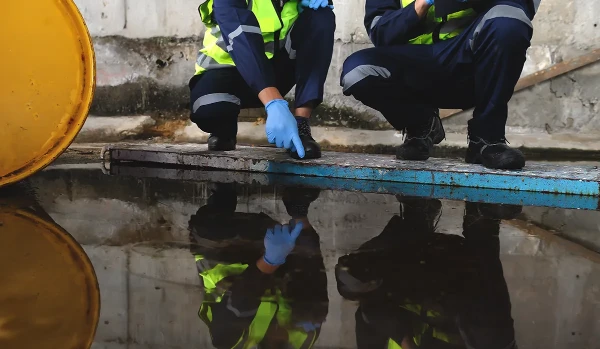
1. Water Contamination in Fuel

2. Incorrect Fuel Dispensing
International Standards Achieved
PTG Energy Public Company Limited and its affiliated companies operate their businesses in accordance with internationally recognized standards to strengthen corporate governance, risk management, and long-term sustainable business operations. The Group places strong emphasis on continuously enhancing its operational processes to align with globally accepted standards.
ISO 9001:2015
Quality Management System- PTG Energy Public Company Limited
- Atlas Energy Public Company Limited
- PTG Logistics Company Limited
ISO 14001:2015
Environmental Management System- PTG Energy Public Company Limited
ISO 45001:2018
Occupational Health and Safety Management System- PTG Energy Public Company Limited
- Atlas Energy Public Company Limited
ISO 39001:2012
Road Traffic Safety Management System- PTG Logistics Company Limited
Internal Training on Quality Management System (QMS)

Enhancing employee capabilities in Quality Management System (QMS)
To strengthen corporate governance, risk management, and operational improvement. Accordingly, the Company provides training programs aligned with international standards such as ISO 9001, ISO 14001, and ISO 45001, as well as Internal Audit and Lead Auditor courses, to develop employees' knowledge, understanding, and competencies in auditing, assessment, and systematic system improvement.

Knowledge Development in SCOR Model
To enhance supply chain management performance across all dimensions, including processes, performance, and risk management. Lifelong learning is further promoted through the LONG LEARN DO platform, which covers content on Total Quality Management (TQM), systematic problem-solving, and analytical thinking skills.

Training in Process Safety Management (PSM) and Food Safety
To enhance operational efficiency and support the creation of sustainable long-term value for the organization. Additionally, to cultivate a culture of continuous improvement, the company also provides training in Kaizen and Lean Six Sigma.

In 2025
The Company did not identify any incidents of non-compliance
That resulted in significant impacts on consumer health and safety arising from the use of the Company’s products and services. Nevertheless, the Company continues to strictly control the quality and safety of its products and services in accordance with established standards, supported by continuous monitoring, inspection, and risk management systems throughout the supply chain, in order to prevent and mitigate potential risks in the future.